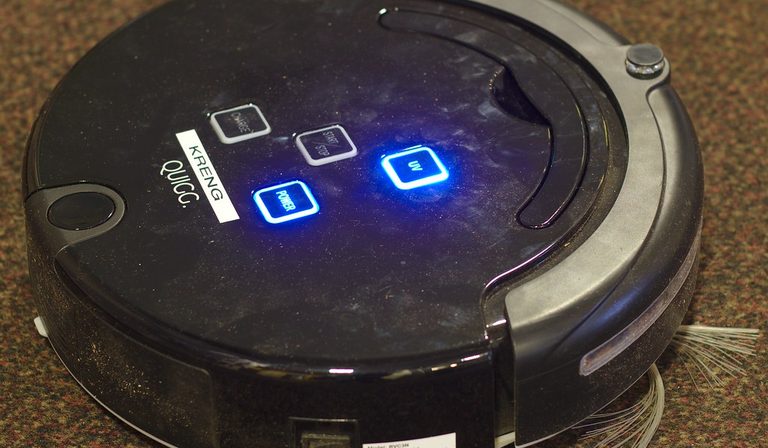
The robot vacuum market has matured. By 2026, almost every model above $200 can navigate a room without getting stuck on a rug fringe. But the differences that matter—reliability, long-term cost, and how well the thing actually cleans—are still buried under marketing noise. This guide cuts through it. I’ll cover the six features that separate a good purchase from a regret, with honest tradeoffs on price, ecosystem lock-in, and real-world durability.
1. Navigation and Mapping: LiDAR vs. vSLAM vs. Hybrid
How a robot sees your home is the single biggest determinant of whether it will clean efficiently or bump into furniture for 90 minutes.
LiDAR (laser-based) is the gold standard. A spinning laser tower on top builds a precise map in any lighting, even pitch black. These robots clean in neat rows, return to base when low on battery, and resume where they left off. The tradeoff: the laser tower adds height, so the robot may not fit under low couches. Also, LiDAR units can fail after a few years—repair costs often exceed the robot’s value. Expect LiDAR models from $350 to $1,200.
vSLAM (camera-based) uses visual landmarks to navigate. It’s cheaper (often $200–$500) and allows a lower profile. But it struggles in dim rooms or on dark carpets, and mapping accuracy degrades over time as furniture shifts. If you have a mostly open floor plan with good lighting, vSLAM works fine. If you have a cluttered home or run the robot at night, skip it.
Hybrid systems (LiDAR + camera or structured light) are now common in the $600+ tier. They combine the reliability of LiDAR with the obstacle-avoidance smarts of a camera. This is the best of both worlds, but you pay for it, and you’re locked into that brand’s mapping ecosystem—you can’t easily transfer maps to a different robot later.
Bottom line: For most homes, a LiDAR robot in the $400–$600 range is the sweet spot. Avoid camera-only models if you have low light or expect to move furniture often.
2. Suction Power and Floor Types
Suction is measured in Pascals (Pa), but raw numbers are misleading. A 5,000 Pa robot with a poor brush design will leave more debris than a 2,500 Pa robot with a well-engineered roller.
Carpet vs. hard floor: If you have wall-to-wall carpet, you need a robot with a rubber roller (not bristles) to avoid hair tangles and a suction rating above 3,000 Pa. For hard floors, suction is less important—a good side brush and a rubber squeegee do the job at 1,500 Pa.
The tradeoff: Higher suction means louder operation (60–70 dB) and shorter battery life. Most robots automatically boost suction on carpet, but that drains the battery faster. If your home is mostly hard floors, don’t pay extra for 8,000 Pa—you won’t notice the difference.
Self-emptying vs. not: A self-emptying base adds $100–$300 to the price and uses proprietary dust bags that cost $3–$6 each. Over two years, that’s $150–$300 in bags. If you have pets or allergies, the convenience is worth it. If you’re on a tight budget, a manual bin is fine—just empty it after every run.
3. Mopping Capabilities
By 2026, almost every robot above $300 includes a mopping function. But “mopping” ranges from a damp cloth dragged behind the robot to a system that scrubs, washes its pad, and dries itself.
Passive mopping (a water tank with a cloth) is cheap and simple. It works for light dust and spills on hard floors, but it just spreads dirt around if the pad isn’t changed frequently. The robot can’t tell the difference between a wet spot and a dry one, so it may drag water across carpet if you haven’t set no-go zones.
Active mopping (vibrating or spinning pads) actually scrubs. These models cost $500–$1,000 and include a separate water tank. Some can lift the mop pad when crossing carpet—a critical feature if you have area rugs. Without lift, you’ll need to manually remove the mop pad or set virtual barriers.
Self-washing and self-drying bases are the top tier ($800–$1,500). The robot returns to the base, washes its pad with clean water, dries it with hot air, and refills its tank. This eliminates the need to touch a dirty mop pad for weeks. The tradeoff: the base is large (fits under a kitchen counter? maybe not), and you must refill the clean water tank and empty the dirty water tank every few days. Also, the base’s drying fan can be loud.
Ecosystem lock-in: Once you buy a self-washing base, you’re tied to that brand’s cleaning solution (often $10–$20 per bottle) and replacement pads. Generic alternatives rarely exist.
4. Obstacle Avoidance and AI
A robot that can’t avoid a phone charger cord or a pet’s toy is a robot that will get stuck and stop cleaning. Obstacle avoidance has become a key differentiator.
Camera-based avoidance (common in $400–$700 models) uses a front-facing camera to identify objects. It works well in good light but fails on dark cables or small items like socks. Privacy is a concern—these cameras send images to the cloud for processing. Some brands offer on-device processing, but check the privacy policy.
Structured light or 3D sensors (like those used in some $600+ models) project infrared dots to detect objects regardless of lighting. They’re more reliable than cameras for small obstacles and don’t raise privacy issues. The tradeoff: they add cost and can be fooled by reflective surfaces like mirrors.
Lidar + AI fusion is the current best-in-class. The robot uses LiDAR for mapping and a separate sensor (camera or structured light) for obstacle detection. This combination is found in $800+ models and reduces stuck incidents to near zero. But it’s overkill for a sparsely furnished studio apartment.
The real tradeoff: No system is perfect. Even the best robots will occasionally eat a loose sock or get tangled in a tassel rug. If you have a cluttered home, budget for a model with proven obstacle avoidance (read real user reviews, not marketing claims). If your floors are mostly clear, a basic LiDAR robot with no avoidance will do fine.
5. Self-Maintenance Features
Beyond self-emptying and self-washing, there are other maintenance features that affect long-term reliability.
Brush tangle prevention: Some robots have a comb-like mechanism that cuts hair off the brush as it spins. This is a huge time-saver if you have long hair or pets. Without it, you’ll need to cut hair off the brush every few runs. This feature is becoming standard in $500+ models.
HEPA filters: If you have allergies, a HEPA filter is non-negotiable. Most robots in the $300+ range offer them, but replacement filters cost $10–$20 and need changing every 3–6 months. Some brands require you to buy filters directly from them—another lock-in.
Battery replacement: Robot vacuum batteries degrade after 1–2 years. Some models (like those from iRobot and Roborock) have user-replaceable batteries for $30–$60. Others are sealed and require sending the unit in for service. Check this before buying.
6. Ecosystem and App Integration
The app is where you set schedules, no-go zones, and room-specific cleaning. A bad app can ruin a good robot.
Multi-floor mapping: If you have a multi-story home, you need a robot that can store multiple maps and automatically detect which floor it’s on. This is standard in LiDAR models but rare in cheap vSLAM ones.
Smart home integration: Most robots work with Alexa and Google Assistant. HomeKit support is still rare (mostly Roborock and iRobot). If you’re deep in the Apple ecosystem, that narrows your options.
No-go zones and virtual walls: All mid-range robots let you draw no-go zones in the app. But some require you to place physical magnetic strips (old tech). Avoid those.
Firmware updates: A robot that gets regular firmware updates will improve over time. Brands like Roborock, Dreame, and iRobot have good track records. Budget brands often abandon models after a year.
Subscription models: Some brands now offer “premium” app features (e.g., advanced scheduling, multi-user access) for a monthly fee. This is a growing trend and a red flag. Avoid any robot that locks basic functionality behind a subscription.
Closing Recommendation
For 2026, the best value is a LiDAR-based robot with self-emptying base and active mopping with carpet lift, in the $600–$800 range. That combination covers 90% of homes without the cost and bulk of a self-washing base. If you have no carpets, save money by skipping the self-emptying base and buying a $350 LiDAR model with passive mopping. If you have pets and long hair, prioritize brush tangle prevention and a HEPA filter. Avoid the cheapest models (under $200) unless you have a single, empty room—they’ll frustrate you more than they’ll clean.
This page contains affiliate links. If you purchase through these links, we may earn a small commission at no extra cost to you.